
Imagine a world where no one dies from vehicle crashes

People make mistakes
A safe transportation system recognizes this reality. Engineers should create roads and vehicles that anticipate human mistakes and prevent them from leading to death or serious injury.
Humans are fragile
Our bodies can only withstand so much force in a crash. The system must be designed to protect us. Features that slow down traffic, separate different types of road users, and add layers of protection all help to reduce the risk of severe outcomes when crashes occur.
Safe System Approach
Principles
- Death and serious injury is unacceptable
- Humans make mistakes
- Humans are vulnerable
- Responsibility is shared
- Safety is proactive
- Redundancy is crucial
Complementary elements
- Safe road users
- Safe vehicles
- Safe speeds
- Safe roads
- Post-crash care
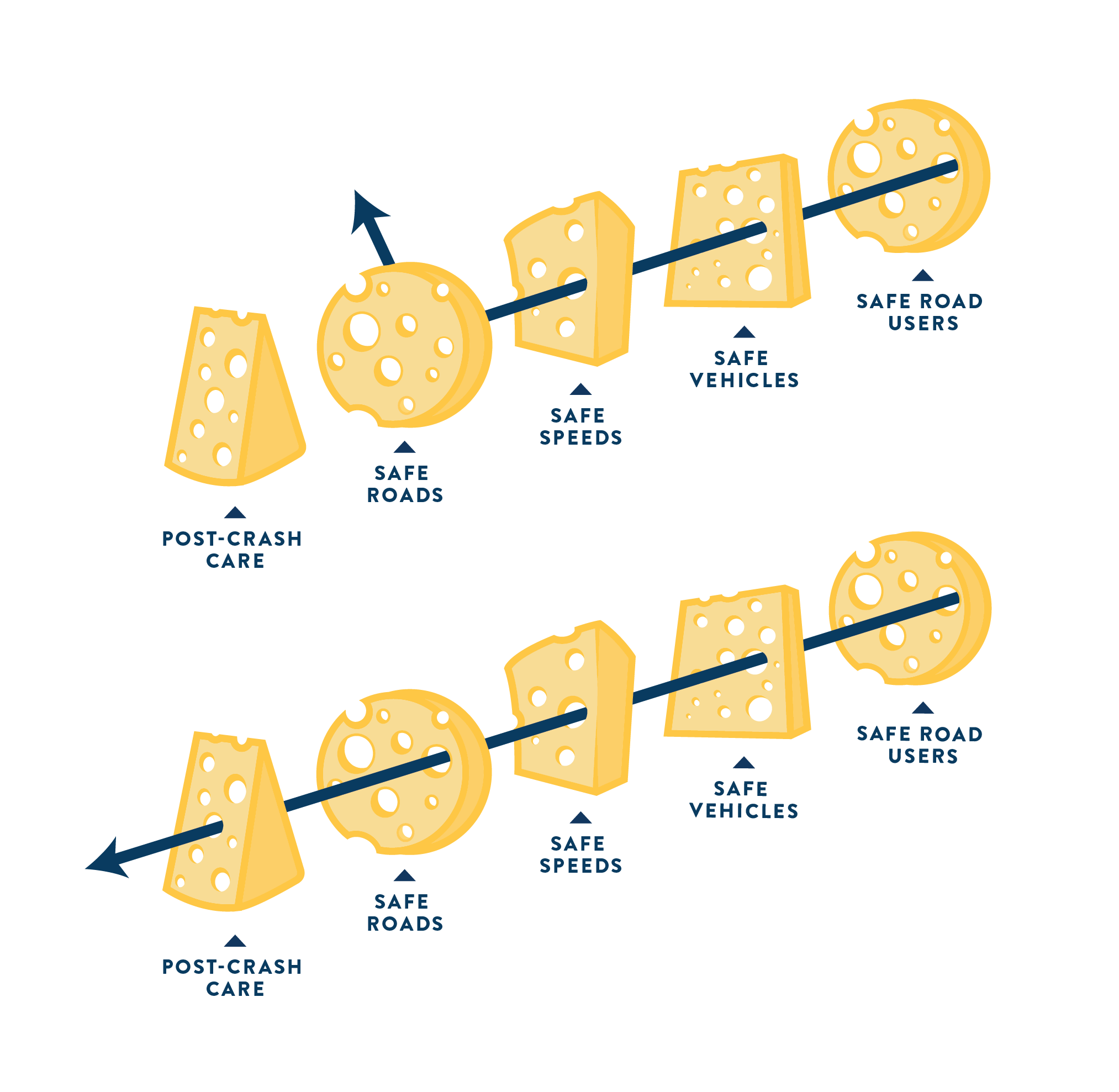
In the Swiss cheese model, each slice is a safety element that provides a layer of protection, and the holes are problems or weaknesses in each layer of safety. Serious injury or death only occurs when holes in all five slices align, meaning every layer of protection fails. In a Safe System, the layers work together to prevent a crash from occurring or reduce the likelihood of someone being seriously hurt or killed if a crash does happen. To improve the Safe System, the goal is to reduce the number or the size of holes.