
Minnesota Department of Transportation

511 Travel Info

Road usage charge in Minnesota

Exploring a road usage charge in Minnesota

We’re working to sustain Minnesota’s roads and bridges well into the future.

We rely on a fuel tax.

Minnesota relies on the pay-at-the-pump fuel tax and other state revenue sources to build and maintain state roads and bridges.
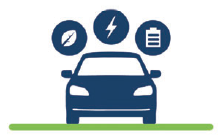
But, modern vehicles use less fuel, or no fuel at all.

Revenue from the state fuel tax will decrease as cars become more fuel-efficient and hybrid and electric vehicles use little or no fuel. Recent state fuel tax increases have helped, but we need a long-term solution that can keep up with modern vehicles and rising construction costs.
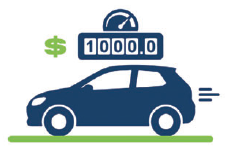
So, we're exploring a new way of raising revenue.

We’re exploring a new way of raising revenue called a road usage charge (RUC). With RUC, drivers pay a fee based on the miles they drive instead of a tax on the amount of gas they buy. A RUC could supplement or eventually replace the state fuel tax with revenue that is fairer and more transparent for Minnesotans—and more sustainable for the transportation system.


How the RUC works

  1. The driver selects a mileage reporting option.
  2. The driver reports their miles driven.
  3. The State uses total miles driven to calculate the RUC the driver owes.
  4. The driver pays the RUC.

About the RUC

We're exploring how a RUC could work as a potential solution to fund transportation in our state.

A road usage charge, or RUC, is a per-mile fee that could offer a new way to fund Minnesota’s roads. Most gas- and diesel-powered vehicles pay fuel taxes that are built into the cost of fuel at the pump. As more cars transition to electric, hybrid, or increasingly fuel-efficient versions, the fuel tax revenues that fund Minnesota’s roads, bridges, and infrastructure are becoming less reliable. At the same time, higher inflation is making construction more expensive. All of these factors make it harder than ever to fund the maintenance of our state’s roads and bridges.

With RUC, drivers would pay a per-mile fee instead of the current fuel tax, which is paid by the gallon. Replacing or supplementing fuel taxes with RUC could potentially provide a more sustainable way to fund transportation in Minnesota.

Our research shows that residents within rural areas and outlying suburban areas tend to drive older cars that are less-fuel-efficient and, thus, are currently paying more in fuel tax than higher fuel efficiency, hybrid, or electric vehicles. With a RUC, drivers of less-fuel-efficient cars tend to save money when compared to what they currently pay in fuel taxes.

Since EV drivers don’t purchase fuel, they also don’t have a way to pay the fuel tax, which gas-powered drivers typically pay at the pump. As a result, a switch to a RUC system would mean that EV drivers would pay a little more in a RUC system compared to the current fuel tax-based system. However, the overall cost advantage of owning an EV, a hybrid, or another fuel-efficient vehicle is still significant. A RUC could also replace the registration surcharge that electric and hybrid vehicles pay in the state, potentially bringing additional savings to some drivers.

Even with a RUC system, Minnesota drivers could potentially still save hundreds of dollars a year by switching to EVs because of fuel cost savings.

Minnesota has tested multiple mileage reporting options that strictly protect driver privacy, both in the 2011 Road Fee Test and in the 2026 Minnesota Road Usage Charge Demo.

Active RUC programs in Hawaii, Oregon, Utah, and Virginia often provide mileage reporting options that allow users to determine how much vehicle data they want to share. Common mileage reporting options include manual odometer readings, smartphone apps, in-vehicle plug-in devices, and telematics-based methods. While many drivers choose non-GPS options, drivers who do not want to pay for out-of-state travel may select GPS-enabled options. In these cases, location data is used to determine miles driven outside the state.

For many states, the fuel tax is decreasing in value as fuel-powered vehicles become increasingly fuel-efficient or transition to electric and hybrid versions.

About one dozen states have conducted RUC demonstrations, including the following states:

  • California
  • Colorado
  • Delaware
  • Kansas
  • Pennsylvania
  • Washington

Five states have active RUC programs:

  • Oregon
  • Utah
  • Virginia
  • Hawaii
  • Vermont

Our RUC research over the years

Since 2007, we have gathered feedback and conducted studies to explore the RUC concept, then referred to as mileage-based user fees (MBUF) or distance-based fees. This work has explored many different aspects of a RUC to understand potential costs, administrative requirements and technical feasibility.

We conducted qualitative research with nearly 100 Minnesotans to understand public and industry opinions
regarding the RUC. Research included an online discussion with eight industry experts and 10 focus groups comprising everyday Minnesotans in Duluth, the Twin Cities metro area, and Mankato.

To deepen our understanding of the public’s perspectives on the RUC, we conducted nine mini-focus groups with 60 everyday Minnesotans in Duluth, the Twin Cities Metro, and Mankato.

We conducted 821 phone-mail-phone interviews with randomly selected Minnesota drivers to learn more about their understanding of funding and transportation issues.

We conducted the Minnesota Road Fee Test with 500 people in Hennepin and Wright Counties. The research tested technology that could eventually be used to measure miles and road use while strictly protecting driver privacy.

We were awarded a federal grant to plan and design a RUC approach using car share services. We partnered with two car share providers in Minnesota, as well as a connected and automated vehicle research firm, to plan, design, test, and certify the system. We also worked with the University of Minnesota to establish a rate-setting approach and administer a survey to more than 5,000 car share customers to gauge their support for the RUC concept. Findings from this work were published in the 2020 Minnesota Distance Fee Final Report.

We received a grant to implement a 12-month pilot of the shared mobility-based RUC system using embedded telematics for assessment and reporting. A total of 64 share mobility fleet vehicles and one connected/automated vehicle provided road usage data. The project was successful in accurately collecting and transmitting the necessary data for RUC assessment and confirmed that levying fees on fleet services may lower RUC administrative costs by reducing the total number of collection points and accounts to be administered and audited.

The Minnesota road usage charge demonstration (MnRUC demo) ran from March through August in 2026. By participating, drivers learned about what they might pay if a RUC replaced the state fuel tax while also supporting our research about built-in vehicle technology. At the end of the demo, participants were asked to share their experience.